Repiping improves water pressure and water quality by replacing narrowed, corroded, contaminant-shedding pipe runs with new, properly sized lines (usually PEX or copper), so you get full flow to fixtures again and cleaner water at the tap.
Most homeowners don’t wake up thinking, “Today I will reconsider my plumbing system.” They notice it in more annoying ways: the shower goes limp when the toilet refills, the kitchen faucet spits and coughs, the “cold” water tastes a little like a pocketful of coins, and suddenly you’re negotiating with your own house for basic comfort. In older homes especially, low water pressure issues and water quality concerns tend to be the same story wearing two outfits.
Repiping is disruptive. It’s also one of the few repairs that can actually reset the clock, instead of playing whack-a-mole with leaks, valves, and mystery restrictions hiding inside walls.
Key Takeaways
- Low pressure in older homes is often a volume problem caused by internal corrosion, mineral buildup, partially closed valves, hidden leaks, or old layout choices that create pressure loss where you feel it most.
- Water quality drops when aging pipes shed rust and sediment, leach metals, or collect biofilm in rough interiors and dead legs.
- A full repipe restores strong, consistent water flow by returning the full internal diameter and simplifying flow paths, which shows up as steadier showers, faster tub fills, and fewer “who stole my pressure” moments during peak use.
- Replacing aging materials can reduce exposure risks tied to lead and corroded galvanized surfaces, a concern the EPA discusses in its summary on lead in drinking water and galvanized plumbing.
- Planning matters more than bravado: pipe material choice, access strategy, permitting, patching, and testing determine whether this becomes a clean upgrade or an expensive drywall hobby.

What Causes Low Pressure In Older Homes?
Corrosion And Scale
The classic culprit is internal narrowing. Galvanized steel pipes and other metal pipes don’t usually fail with drama at first. They shrink from the inside out. Rust, scale, and mineral buildup grab onto the pipe walls, then build layer on layer until the pipe interior looks like a clogged artery.
That’s not me being poetic. The inner diameter can effectively get cut in half in old houses, which is why the flow rates crash even if the city’s supply is fine. If you want a quick visual, there’s a straightforward explainer on why old homes lose pressure as galvanized lines corrode. It’s a little too satisfying watching someone slice open a problem.
Once that restriction exists, every demand spike punishes you. The dishwasher kicks on, someone turns on a sink, the shower temperature swings, and you blame the water heater like it’s guilty by default.
Leaks And Bad Valves
Pressure issues also come from water going places you never intended. Small leaks behind walls or under a slab can quietly drain volume before it ever reaches your faucet. Sometimes you see it as a spike in the bill. Sometimes you see it as warping, stains, or that creeping “why does this room smell damp?” feeling that hints at hidden water damage.
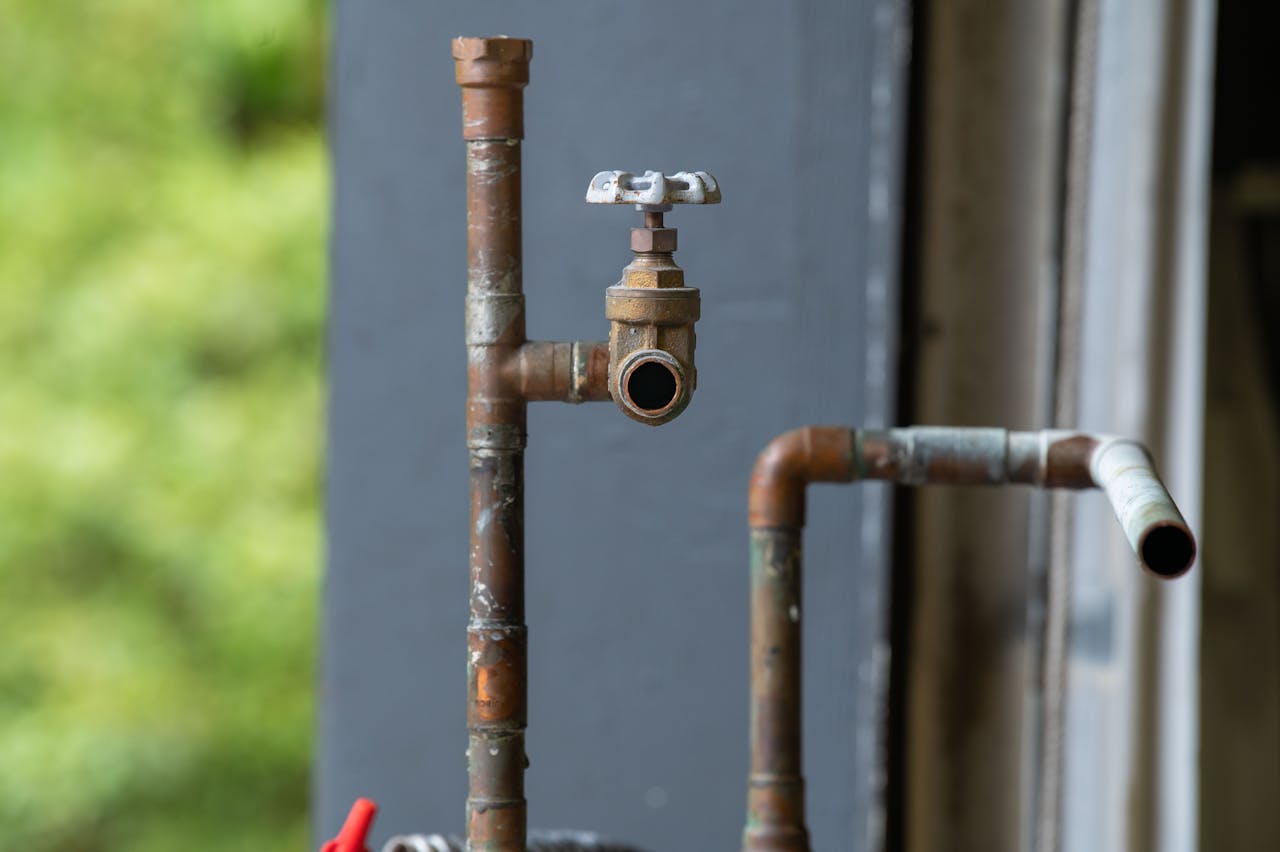
Valves deserve their own side-eye. Old gate valves can seize half-closed. Multi-turn shutoffs can corrode. A failing main valve can choke your whole house and mimic poor water pressure, especially when more than one fixture runs. If the valve is original to the home, treat it like an elderly relative: respect it, but don’t assume it’s still doing its job.
Bad Sizing And Layout
Some older plumbing systems were installed for a different era of demand. One bathroom, one laundry setup, fewer simultaneous uses. Then someone adds a second shower, a bigger washer, maybe an extra hose bib, and the old pipe networks just can’t deliver without noticeable pressure loss.
Layout matters too. Long runs, lots of sharp turns, weird branches, and sections that were “patched” over decades can create low flow at the far ends of the house. You’ll hear people on plumbingforum.com describing the same pattern: “The guest bath is fine, but the primary shower is sad.” That’s not a ghost. That’s geometry.
What Signs Point To Pipe-Related Water Problems?
Pressure Symptoms
The easy tell is inconsistency. If the pressure swings based on time of day, you might have municipal demand issues. If it swings based on what’s happening inside your own home, that’s usually your piping.
You’ll feel it as low pressure at the shower, a kitchen faucet that can’t keep up with a pot fill, or toilets that take forever. You might also notice that “fixing” one fixture with a new aerator doesn’t change the overall low water pressure, which is the point. The restriction is upstream.
Water Quality Symptoms
Water discoloration is the loudest clue: yellow, orange, brown, or gray, especially after the water has been sitting overnight. Metallic taste. Sediment in the bottom of a glass. Staining in sinks and tubs. That’s often a corrosion byproduct, and it’s not always just iron. Some older galvanized lines can leach other metals as they degrade, which is why I like the blunt breakdown from APEC on corrosion byproducts in galvanized plumbing.
If you’ve ever seen reddish slime or recurring clogging that feels almost organic, iron bacteria can be part of the mess. Minnesota’s health department has a surprisingly readable page on iron bacteria and how it behaves, and yes, it can affect both water quality and pressure.
When Tests Help
I’m not a “test everything always” person, but a few checks can save you from guessing wrong. If you suspect lead risk in older solder or service components, take it seriously. The health impacts aren’t subtle over time, and NRDC’s overview of lead exposure effects is a good reminder that this is not just about taste.
For pressure, a simple pressure gauge at a hose bib can tell you if the supply is healthy, but it won’t reveal internal restriction. If you have decent static PSI but terrible performance under use, that points back to flow restriction, leaks, or layout.
How Does New Piping Restore Strong Water Pressure?
Full Pipe Diameter
Repiping works because it removes the choke points. New piping system, full internal diameter, smooth interior walls, less friction, less turbulence, better water flow. It’s boring in the way that good infrastructure is boring.
If your current lines are badly corroded pipes, replacing them stops the slow narrowing that kills volume. This is the heart of why “repiping improves water pressure” isn’t marketing fluff. It’s physics and geometry, and a lot of homeowners don’t realize they’ve been living with a 50 percent pipe for years.
Balanced Flow Paths
A good repipe isn’t just swapping material. It’s rethinking the layout so the plumbing performance doesn’t collapse when two things run at once.
Modern installs often use a manifold approach for PEX piping systems, or at least a cleaner trunk-and-branch design with fewer mystery splices and fewer weird detours. Balanced paths reduce pressure issues at the far fixtures, and they also make future maintenance less chaotic because you can isolate zones instead of shutting down the whole house.
Fixture-By-Fixture Results
This is where people finally feel the payoff. Showers stop pulsing when toilets refill. A faucet doesn’t drop to a trickle when the washing machine starts. Outdoor hose flow becomes usable again.
One consumer-facing breakdown I like is this guide on how replacing old lines restores consistent pressure. It’s not fancy; it’s just aligned with what actually happens in real houses when restrictions get removed, and the flow stops being strangled.
How Does Pipe Replacement Improve Water Quality?
Rust, Metals, Sediment
Old steel pipes shed rust. Aging copper can corrode too, and pinhole leaks can show up alongside water that starts tasting “off.” Sediment ends up in aerators, in cartridges, in appliance valves. You’re not imagining it when the water clarity looks worse after the line’s been sitting overnight.
Replace the old pipe material, and you remove the main contamination source inside the house. You’re no longer dragging clean municipal supply through a corroded filter of your own making.
Lead And Solder Risk
If your house has old solder joints or lead-era components, replacement is about safety, not vibes. The EPA’s Lead and Copper Rule Improvements FAQ is basically the government telling everyone, “Stop pretending legacy materials are fine forever.” The trend line is clear: replace lead service lines, replace galvanized lines that have accumulated lead particles, and stop normalizing exposure risk.
If you’re unsure whether you have lead pipes, don’t guess. Identify. A plumber can usually tell quickly once they see what’s coming in and what’s branching out.
Biofilm And Stagnation
Old piping with rough interiors gives biofilm a place to hang on. Dead-legs, rarely used branches, and weird old remodel segments create stagnation pockets. That can contribute to smell, taste, and sometimes that “why is my water gross only in this bathroom?” situation.
New PEX pipes have a smooth interior that discourages buildup. Copper is often described as naturally antimicrobial, which is true in a general sense, but the real-world win is still design: fewer stagnation zones, fewer places for gunk to camp out.
Choose Materials That Fit Your Home And Goals
I’ve watched homeowners spiral over copper versus PEX like it’s a moral decision. It’s not. It’s a risk and performance decision, with code and installer skill hovering over it like a hawk.
PEX Fit And Tradeoffs
For most homes, I’d go PEX for the majority of runs. Modern PEX repiping is forgiving, fast to route, and usually cheaper on labor because it can snake through walls with fewer openings. That means less patching, less downtime, and fewer “why is my ceiling open” photos in your camera roll.
PEX does have tradeoffs. Some buyers still ask for copper because it feels premium. Some people worry about plastics, even when the product is certified for potable use. My take is practical: fewer joints in hard-to-reach places, easier isolation, easier repair when something does happen. Leaks are a fact of homeownership. I prefer the kind that are easier to manage than giant copper runs.
Copper Fit And Tradeoffs
Copper feels like the luxury option because it’s been the default “good plumbing” for a long time. Sometimes it’s still the right call, especially where code, heat exposure, or specific installation constraints push you there. But copper is not invincible, and corrosion issues in certain water chemistry conditions are real. That’s how you get pinhole leaks and the joy of cutting open a wall for a repair you did not schedule.
If you do go this route, insist on quality workmanship and realistic expectations. New copper is great until it isn’t, and the failure mode can be expensive.
Mixed Systems And Code
A mixed approach is common: PEX piping for long runs, short copper stubs where needed, and code-compliant transitions. The key is doing it cleanly with listed fittings, proper support, and pressure testing.
Here’s a simple comparison that matches what I see in the field and in homeowner stories.
Material | Strengths | Common Pain Points | Best Fit |
PEX | Flexible routing, fewer wall openings, good freeze tolerance, fast install | Perception in resale, needs protection from UV and physical damage | Most repipes, especially where access is tight |
Copper | Long track record, heat tolerance, familiar to inspectors | Can corrode and develop leaks, labor-intensive, pricier | Select areas, certain local code preferences |
Plan The Project, Budget, And Hire Smart
Scope And Access Plan
A repipe is mostly an access problem disguised as a plumbing problem. Where can the crew run lines? Attic, crawlspace, through cabinets, behind shower walls, down chases. The plan determines how much drywall gets opened and how fast you get reliable water back.
Also decide early if you’re replacing shutoffs, hose bibs, and fixture valves. Old valves can sabotage a brand-new system if you leave the weakest links in place.
Cost And Value Drivers
The price range is wide because houses are wildly different. Size, number of fixtures, slab vs crawlspace, story count, permit requirements, patching, and whether you’re also upgrading the main line all move the number.
I like budgeting with a reality check: expect to spend 20 to 40 percent beyond bare materials once you include wall openings, finish work, and the “while we’re in here” surprises. Leaks can be stealthy, and some sources cite huge waste from household leaks over time, which is why this piece on repiping benefits and leak waste hits a nerve.
One more angle: certain materials have known failure histories. If you have polybutylene pipes, the clock is not your friend. This quick overview of why Poly B deteriorates lines up with what plumbers keep repeating: it’s often a full replacement conversation, not a “fix one spot” conversation.
Cost Driver | What Changes The Cost | What You Can Control |
Access | Slab, tight chases, finished ceilings | Choose routing that minimizes openings |
Fixture count | More bathrooms, more branches | Combine upgrades into one scope |
Permits/inspection | Local rules vary | Hire someone who actually pulls permits |
Finish work | Drywall, paint, tile | Decide if you want turnkey restoration |
Pro VS DIY Threshold
DIY-friendly routes exist. I get the temptation. But whole-house water repiping is closer to replacing a roof than swapping a faucet. Planning is everything, and half-measures can turn into chaos when you discover that one “simple” section ties into five others.
If you’re comfortable with permits, sizing, manifolds, pressure testing, and you have the time to open and repair walls, you can do parts. Most people who start DIY end up hiring pros for the heavy lift, and sometimes they pay more because now the system is mid-surgery.
If you’re living in the home, have a family, or you just don’t want to gamble with water damage, hire professionals. A clean install with documented testing and warranty is worth more than bragging rights.
Conclusion
If you’re stuck in the loop of low flow, weird taste, stains, and mystery pressure drops, repiping is the blunt solution that actually ends the argument. You remove the internal corrosion, open the diameter back up, eliminate chronic leaks, and stop your home from seasoning your drinking water with rust and metal. It’s a short-term disruption for long-term reliability, and honestly, that trade tends to feel better a month after the patching dust settles than it does while you’re staring at a hole in the wall wondering why houses are like this.
FAQ
1. Will Repiping Fix Low Water Pressure Everywhere?
If the restriction is inside your home’s pipes, yes, repiping usually restores strong performance. If your municipal supply is low, you may still have limits, but you’ll stop losing pressure to internal narrowing and leaks.
2. Does Repiping Automatically Improve Water Quality?
It improves it when the problem is internal contamination from corrosion, sediment, or leaching. It won’t change the quality coming from the city, but it stops your house from making it worse.
3. How Do I Know What Pipe Material I Have?
Look near the water heater, under sinks, and at the main line entry. Galvanized looks like threaded steel. Copper is obvious. PEX is flexible plastic tubing. If you see gray plastic from the 80s and 90s, ask about polybutylene pipe specifically.
4. Is PEX “Safe” For Drinking Water?
In most regions, yes, when it’s certified and installed to code. Use a licensed installer who uses approved fittings and follows local requirements for protection and support.
5. Will Buyers Care If It’s PEX Instead Of Copper?
Some will ask. In many markets, a properly installed PEX system is seen as a practical upgrade, especially if you can show permits and testing. Copper still has “premium” vibes, but fewer future leaks is a pretty good vibe too.
Tired Of Plumbing Problems? It May Be Time For Repiping
If you’re constantly dealing with leaks, low water pressure, rusty water, or plumbing repairs that never seem to end, the problem may be deeper than a single pipe. As plumbing systems age, pipes can corrode, crack, and restrict water flow, leading to ongoing issues throughout your home. In many cases, repiping or whole home pipe replacement provides a lasting solution that saves homeowners time, stress, and money.
At Yorkshire Plumbing, we help Santa Rosa homeowners understand the true condition of their plumbing systems. Using advanced diagnostic tools, our team can identify hidden problems and determine whether repairs or a full repipe is the better long-term investment. You’ll get honest answers, clear recommendations, and quality workmanship every step of the way.
With nearly a decade of experience serving Sonoma County, Yorkshire Plumbing has earned a reputation for reliable service and dependable results. If your home’s plumbing is showing its age, contact Yorkshire Plumbing today to schedule a professional repiping evaluation.
Disclaimer
The information provided on this website is for general informational and educational purposes only and is not intended as professional plumbing or construction advice. You should consult with a licensed plumber or qualified contractor for guidance specific to your home or situation. Do not rely solely on the content of this site to make decisions about plumbing repairs, installations, or maintenance. While we strive to keep the information current and accurate, it may not reflect the most recent industry standards or code requirements. Yorkshire Plumbing & Drain Services disclaims all liability for any actions taken or not taken based on the content of this site, to the fullest extent permitted by law.